
Universe in a day
A team working on the Titan supercomputer simulates the biggest thing of all in a flash, then shares.

A team working on the Titan supercomputer simulates the biggest thing of all in a flash, then shares.

On the roads around the Bay Area in 2015, there’s a good chance Brandon Wood will spot one of the

At Lawrence Livermore National Laboratory, Computational Science Graduate Fellowship alum Brandon Wood applies the world’s most sophisticated molecular dynamics codes on America’s leading supercomputers to model hydrogen’s reaction kinetics.
Back to the hydrogen future Read Post

Sandia National Laboratories investigators turn to advanced modeling to test the reliability of the joints that hold nuclear missiles together.
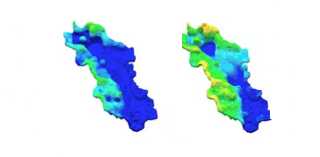
A PNNL team builds models of deep-earth water flows that affect the tiny organisms that can make big contributions to climate-changing gases.

More than 10 years after simulations first suggested its presence, observations appear to confirm that a key instability drives the shock behind one kind of supernova.
For discovering significant supernova phenomena and simulation flaws, several pairs of eyes beat pages of numbers, Anthony Mezzacappa says. Data
Big explosions, big pictures Read Post

Dark energy propels the universe to expand faster and faster. Researchers are using simulations to test different conceptions about how this happens.
Rewinding the universe Read Post
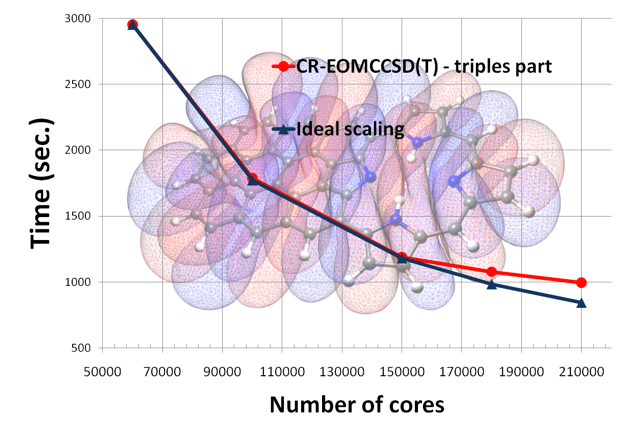
A Pacific Northwest National Laboratory researcher is developing approaches to spread the work evenly over scads of processors in a high-performance computer and to keep calculations clicking even as part of the machine has a hiccup.
Exploring the breaking and rejoining of magnetic-field lines requires simulations and computation. A simulation’s accuracy, however, depends on various issues
Sizing up the scales Read Post

When Earth’s magnetosphere snaps and crackles, power and communications technologies can break badly. Three-dimensional simulations of magnetic reconnection aim to forecast the space storms that disrupt and damage.
Predicting solar assaults Read Post
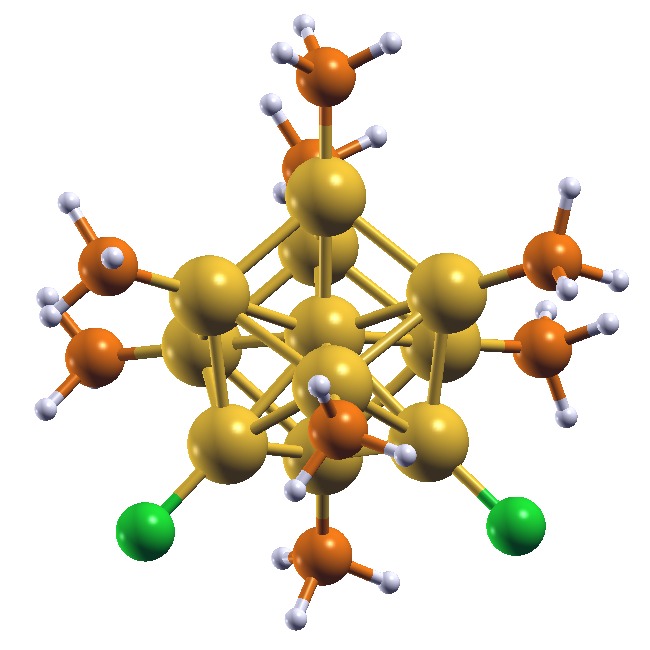
Driven by what’s missing in experiments, Brookhaven’s Yan Li applies quantum mechanics to compute the physical properties of materials.

A Lawrence Livermore National Laboratory researcher simulates the physics that fuel the sun, with an eye toward creating a controllable fusion device that can deliver abundant, carbon-free energy.

Portraying airflow over wings and other fluid movement is tricky. A Department of Energy award for early-career researchers is helping a former DOE CSGF fellow devise mathematical methods to decrease the error rate in fluid modeling.
Foiling airflow error Read Post

MIT’s Dragos Velicanu is helping sort through data from the Large Hadron Collider for clues to the mysteries surrounding the strong force and the early universe.
Dragos Velicanu likes to look at just about everything from a fresh perspective. “Outside work, I like to travel, go

Simulations at Sandia National Laboratories reveal that using magnetism to heat and insulate fusion fuel could recreate solar conditions in the lab.
A new Sandia National Laboratories-based approach to fusion that’s shown promise in computational simulations has passed its first bricks-and-mortar experimental
Putting Big Squeeze Fusion to the Test Read Post
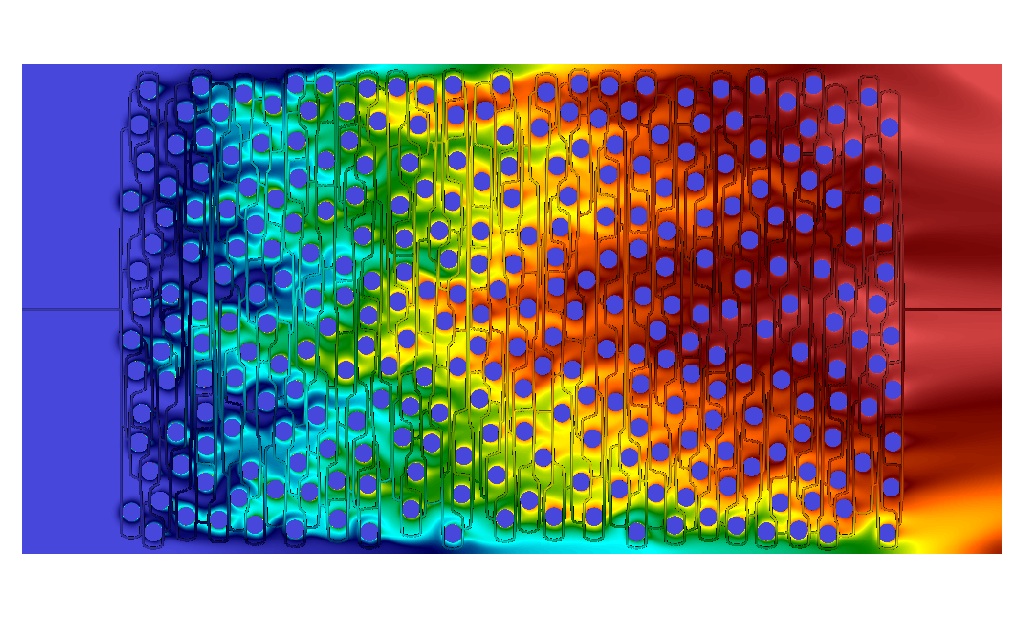
To prevent important information from being missed, a Berkeley Lab team is improving how supercomputers divvy up the ponderous tasks surrounding large simulations’ analytics and visualization.
Filling in the blanks Read Post
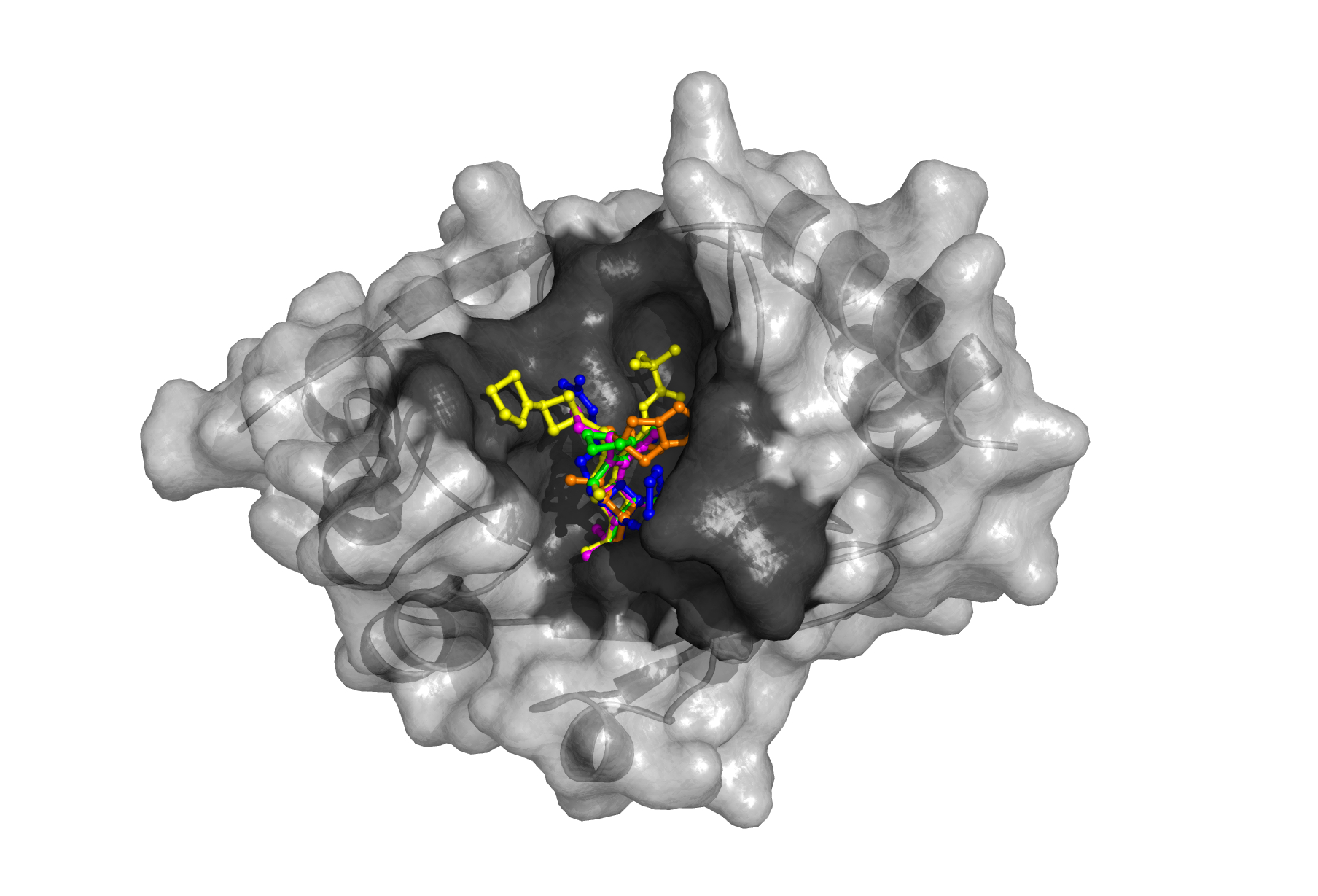
To find a path around antibiotic resistance, a team working with the Intrepid supercomputer at Argonne National Laboratory is simulating molecular binding interactions to rapidly vet new infection-fighting candidates.
Overcoming resistance Read Post
Speed kills, as the slogan says, and in computers what it kills could be disease. Argonne National Laboratory researcher Andrew
In 2007, when Oak Ridge National Laboratory (ORNL) researchers calculated that adding boron would bend carbon nanotubes, they did little
A spontaneous collaboration Read Post
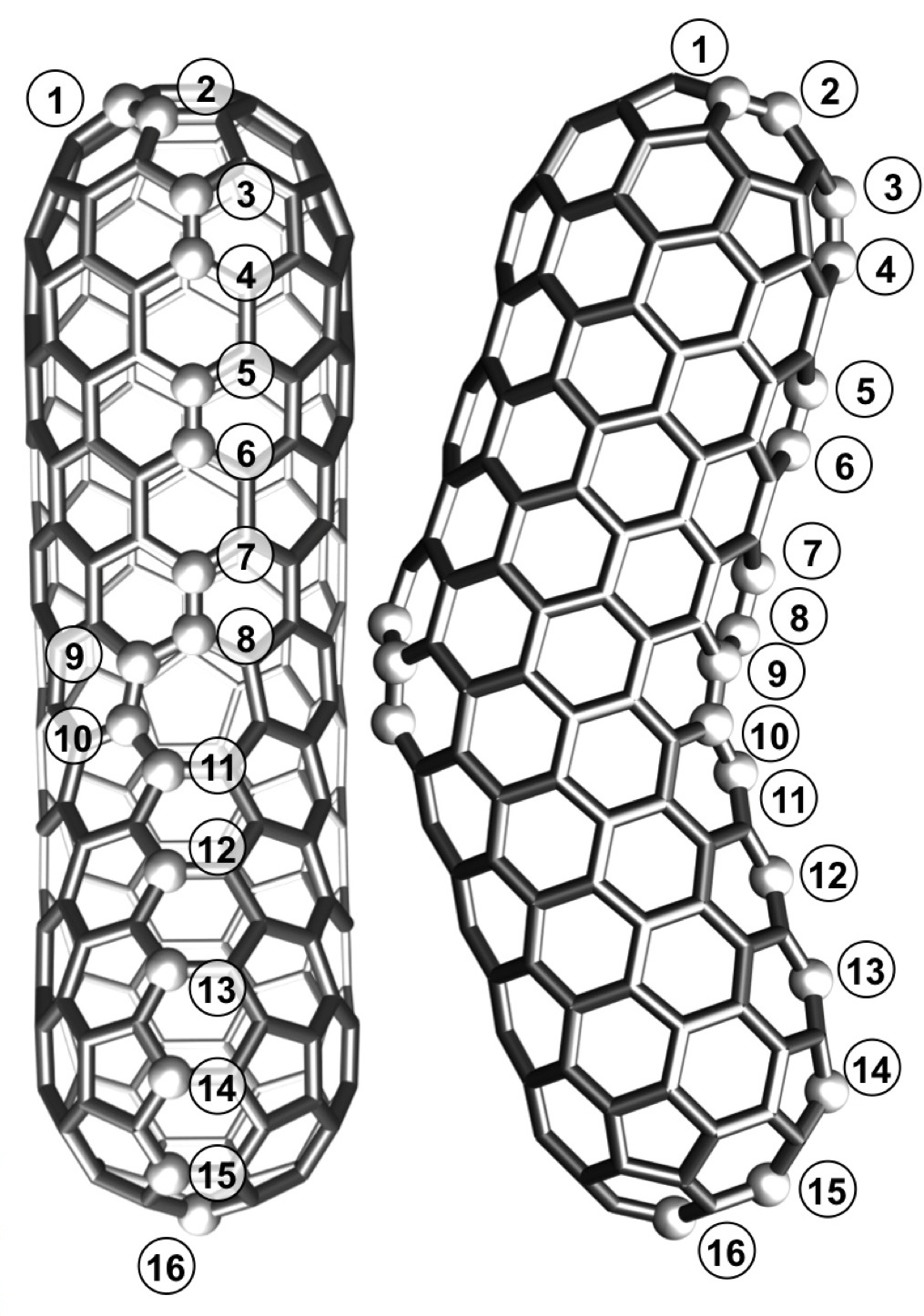
With the help of Oak Ridge computations, scientists are probing the properties of macroscale sponges made of nanoscale carbon-boron tubes. The material could soak up oil spills, help store energy or meet other needs.
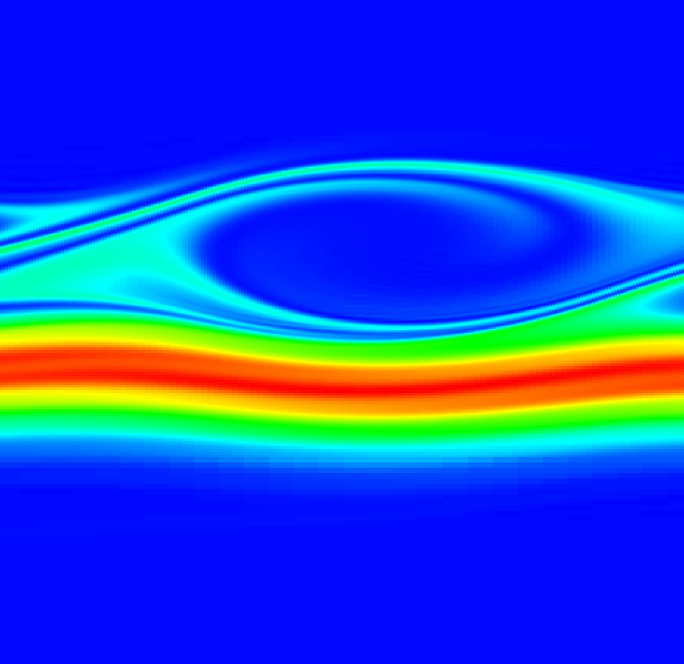
Plasmas are the purview of Livermore scientist and Computational Science Graduate Fellowship alumnus Jeffrey Hittinger. He works both sides of the fusion street – inertial confinement and magnetic confinement – while simulating aspects of these tremendously hot, fast-moving particle clouds.
A passion for pressure Read Post

A Pacific Northwest National Laboratory computation suggests that the water-gas compounds found in ocean permafrost can provide energy and store it, too – and then trap carbon dioxide.
Twice-stuffed permafrost Read Post