
Undersea link to LHC
The Energy Science Network, the high-speed fiber optic data pipeline that has connected all 17 U.S. national laboratories for almost […]
Undersea link to LHC Read Post

The Energy Science Network, the high-speed fiber optic data pipeline that has connected all 17 U.S. national laboratories for almost […]
Undersea link to LHC Read Post

The world’s particle colliders unite to share and analyze massive volumes of data.

A team working on the Titan supercomputer simulates the biggest thing of all in a flash, then shares.
On the roads around the Bay Area in 2015, there’s a good chance Brandon Wood will spot one of the

At Lawrence Livermore National Laboratory, Computational Science Graduate Fellowship alum Brandon Wood applies the world’s most sophisticated molecular dynamics codes on America’s leading supercomputers to model hydrogen’s reaction kinetics.
Back to the hydrogen future Read Post

Sandia National Laboratories investigators turn to advanced modeling to test the reliability of the joints that hold nuclear missiles together.
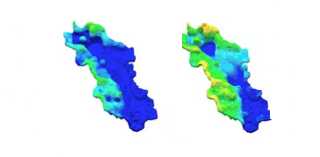
A PNNL team builds models of deep-earth water flows that affect the tiny organisms that can make big contributions to climate-changing gases.

More than 10 years after simulations first suggested its presence, observations appear to confirm that a key instability drives the shock behind one kind of supernova.
For discovering significant supernova phenomena and simulation flaws, several pairs of eyes beat pages of numbers, Anthony Mezzacappa says. Data
Big explosions, big pictures Read Post