
Rewinding the universe
Dark energy propels the universe to expand faster and faster. Researchers are using simulations to test different conceptions about how this happens.
Rewinding the universe Read Post

Dark energy propels the universe to expand faster and faster. Researchers are using simulations to test different conceptions about how this happens.
Rewinding the universe Read Post
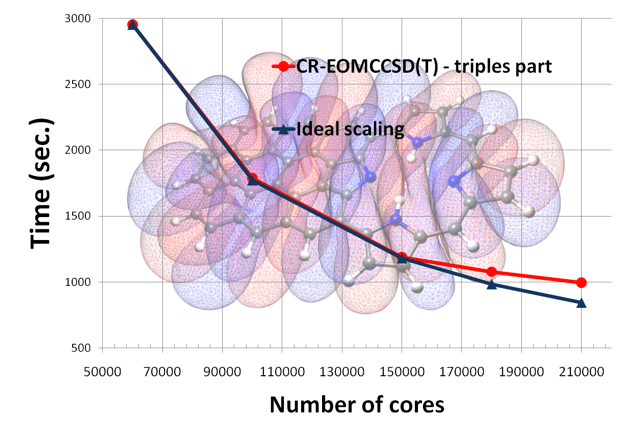
A Pacific Northwest National Laboratory researcher is developing approaches to spread the work evenly over scads of processors in a high-performance computer and to keep calculations clicking even as part of the machine has a hiccup.

Exploring the breaking and rejoining of magnetic-field lines requires simulations and computation. A simulation’s accuracy, however, depends on various issues
Sizing up the scales Read Post

When Earth’s magnetosphere snaps and crackles, power and communications technologies can break badly. Three-dimensional simulations of magnetic reconnection aim to forecast the space storms that disrupt and damage.
Predicting solar assaults Read Post
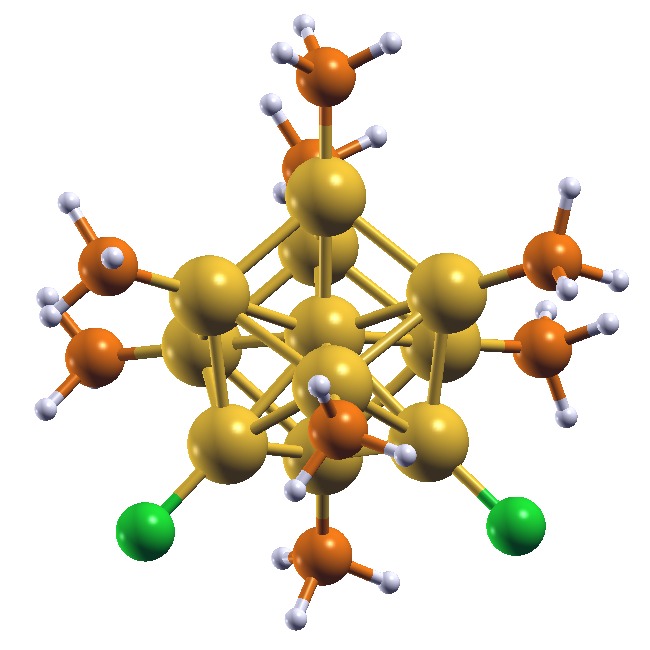
Driven by what’s missing in experiments, Brookhaven’s Yan Li applies quantum mechanics to compute the physical properties of materials.

A Lawrence Livermore National Laboratory researcher simulates the physics that fuel the sun, with an eye toward creating a controllable fusion device that can deliver abundant, carbon-free energy.

Portraying airflow over wings and other fluid movement is tricky. A Department of Energy award for early-career researchers is helping a former DOE CSGF fellow devise mathematical methods to decrease the error rate in fluid modeling.
Foiling airflow error Read Post

MIT’s Dragos Velicanu is helping sort through data from the Large Hadron Collider for clues to the mysteries surrounding the strong force and the early universe.
Dragos Velicanu likes to look at just about everything from a fresh perspective. “Outside work, I like to travel, go

Simulations at Sandia National Laboratories reveal that using magnetism to heat and insulate fusion fuel could recreate solar conditions in the lab.
A new Sandia National Laboratories-based approach to fusion that’s shown promise in computational simulations has passed its first bricks-and-mortar experimental
Putting Big Squeeze Fusion to the Test Read Post